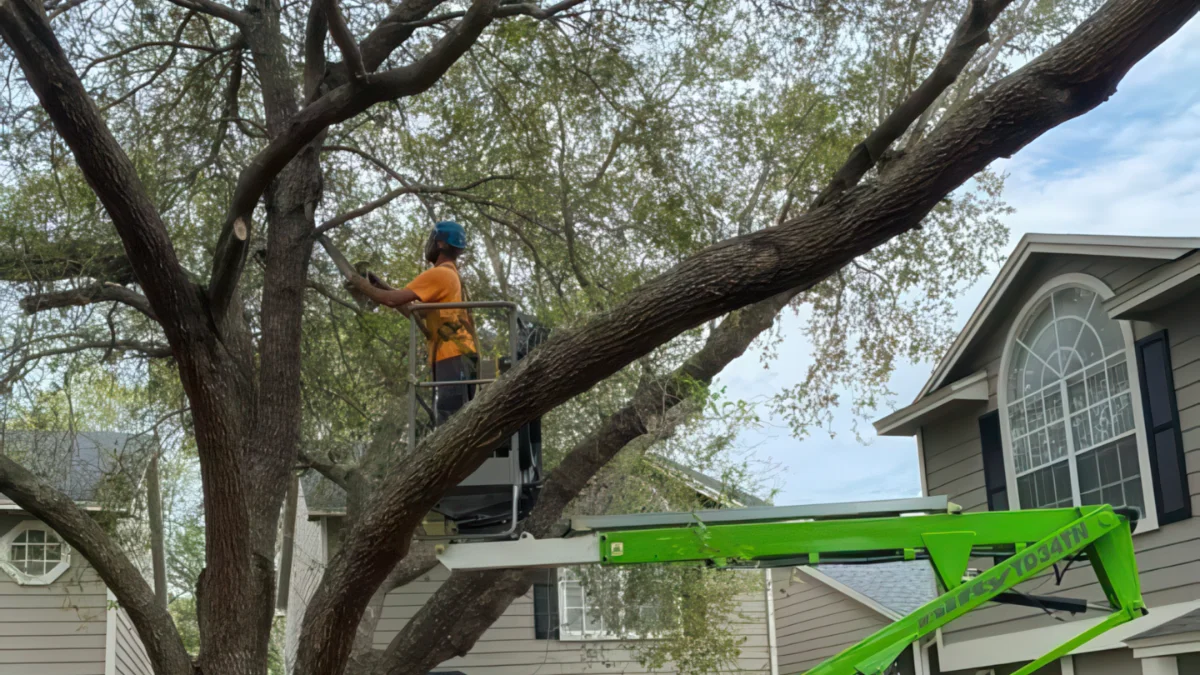
If you’ve been wondering whether you should trim trees before hurricane season rolls around, the short answer is yes, and it matters more than most homeowners realize. Central Florida’s storm season runs from June 1 through November 30, and the trees in your yard can either protect your home or become the thing that destroys it. This isn’t about being overly cautious. It’s about making a smart decision before the wind makes it for you.
Why Central Florida Homeowners Can’t Ignore Hurricane Season
Central Florida is not on the coast, but that doesn’t mean it’s safe from major storm impacts. Inland-tracking hurricanes lose some wind speed as they move over land, but they still carry destructive force deep into Seminole and Orange County. Hurricane Irma in 2017 caused widespread tree failures across the Orlando metro area, including right here in Casselberry and Winter Park. Then in 2022, Hurricane Ian tracked across the state and hammered Central Florida with sustained winds and flooding that left neighborhoods looking like a lumber yard.
The NOAA National Hurricane Center (nhc.noaa.gov) tracks storm data going back decades, and the pattern is clear. August through October is peak activity, and storms don’t politely stop at the coastline. The Orlando area averages over 50 inches of rain per year, and when a major storm hits on top of already saturated ground, the root systems of your trees are working in some of the worst possible conditions. Add wind, and you’ve got a recipe for serious property damage.
According to the Insurance Information Institute, insured losses from Hurricane Ian alone topped $60 billion, making it one of the costliest hurricanes in U.S. history. A large portion of that damage involved trees falling onto homes, vehicles, and power lines. That’s not a distant problem. That’s Seminole County and Orange County homeowners filing claims on their own properties.
The Real Reason Pre-Season Tree Trimming Actually Works
Yes, trimming your trees before hurricane season genuinely reduces your risk of storm damage, and here’s why it works. An untrimmed tree with a dense, heavy canopy acts like a sail in high wind. The branches can’t flex and release pressure because there’s too much leaf mass packed in too tight. When the wind pushes on that canopy and has nowhere to go, something snaps or the whole tree goes over.
Proper pre-season trimming changes that equation. Thinning the canopy creates gaps that allow wind to pass through rather than pile up against a solid wall of leaves and branches. Think of it like punching holes in a sail. The tree can move with the storm instead of fighting it head-on. Dead branches get removed before they become airborne. Weak branch unions get identified and corrected. The whole tree is structurally healthier going into the season.
(And yes, this applies even if you’ve lived through a few storms without major damage. Past luck is not the same as current safety, especially as trees get older and larger.)
Which Trees in Your Yard Are Most Vulnerable
Not all Florida trees handle wind the same way. Some species are genuinely tough in storms, and others are known to fail at a much higher rate. Knowing what’s in your yard helps you prioritize.
Laurel oaks are common throughout Seminole and Orange County, and they’re also one of the most problematic species in a hurricane. They have shallow root systems that struggle in saturated soil. When the ground gets soggy after heavy rain, the root anchorage weakens, and a laurel oak can uproot with surprisingly little wind load. Water oaks have similar issues, with notoriously brittle wood that snaps under wind stress. Camphor trees, which you’ll see all over Winter Park and Maitland, are also brittle and have a high failure rate in storms.
Slash pines are tall and top-heavy by nature, which makes them susceptible to snapping mid-trunk rather than uprooting. If you’ve got slash pines near your roofline, that’s a conversation worth having before June. On the other end of the spectrum, live oaks are generally the most hurricane-resistant tree you’ll find in this area. Deep roots, flexible wood, and a wide-spreading structure all work in their favor. But they still need dead wood removed before storm season. And the sabal palm, Florida’s state tree, is actually built for hurricanes. Its fronds flex and shed in the wind, and the bud at the top of the trunk is well-protected. Don’t let anyone convince you a sabal palm needs heavy trimming before a storm. It doesn’t.
What Pre-Hurricane Tree Trimming Actually Involves
Professional pre-hurricane trimming isn’t just hacking off a few branches. It’s a specific set of practices designed to reduce failure points without damaging the tree’s long-term health. Here’s what it actually covers.
The first priority is removing dead, dying, or diseased branches. These are the pieces that fail first in wind because they’ve already lost structural integrity. A dead branch doesn’t bend. It breaks and flies. After that, canopy thinning reduces wind resistance throughout the tree. A skilled arborist removes interior branches strategically to open up the canopy without destroying the tree’s natural shape. Crossing and rubbing branches are also removed because they create friction wounds that weaken both branches over time.
Crown raising, which means removing the lowest branches, reduces low-hanging hazards near your roof, windows, and fence line. And in some cases, the honest answer is that a tree needs to come down entirely. If a tree is structurally compromised, leaning toward a structure, or showing signs of root rot or fungal disease, trimming it isn’t going to fix the problem. That’s a tree removal situation, not a pruning job. The professional tree pruning and trimming services from All Southern Outdoor include a full assessment of each tree’s condition, so you’re not guessing about what needs to go and what can stay.
When to Trim and What to Avoid Doing
The best time to trim your trees before hurricane season is late winter through early spring, somewhere between February and April. That gives trees time to recover before the heat and stress of summer, and it puts you ahead of the rush when everyone else suddenly realizes the season is starting. But here’s the thing. Trimming in May or even early June is still far better than not trimming at all. Don’t use timing as an excuse to skip it.
One important note for oak trees specifically. Avoid trimming oaks during the summer months if you can help it. Oak wilt, a fungal disease spread by beetles, is more likely to infect fresh pruning cuts when beetle activity is high in the warmer months. Late winter trimming sidesteps this risk entirely. The University of Florida IFAS Extension has solid guidance on oak wilt and seasonal trimming timing for Florida homeowners at their online resources, and it’s worth a read if oaks are your main concern.
Here’s what you absolutely should not do. Don’t let anyone “hurricane cut” or top your trees. This is the practice of chopping off the top of a tree to make it shorter, and it’s one of the most damaging things you can do. Topping creates massive open wounds, destroys the tree’s natural structure, and actually makes it more likely to fail in the next storm because of the weak, poorly attached regrowth that follows. It’s bad arboriculture, and it makes your tree more dangerous, not less. Also, don’t wait until a storm watch is issued to call a tree service. By that point, every crew in Seminole and Orange County is already booked solid, and you’ll be left hoping for the best.
The Soil and Neighborhood Factors That Make Central Florida Unique
Central Florida’s sandy soil is part of what makes tree stability such a specific concern here. Sandy soil drains quickly under normal conditions, but it also compacts and loses its grip on root systems differently than clay-heavy soils. Combine that with the area’s naturally high water table, and after a prolonged rain event, the ground around your trees can become soft enough that root anchorage is significantly reduced. That’s the exact condition that exists during and right after a major storm.
Neighborhoods with older, mature tree canopy carry a higher inherent risk. Winter Park, Maitland, and Casselberry all have neighborhoods where the tree canopy has been growing for 30, 40, or 50 years. Those are beautiful trees, and they add real value to the properties beneath them. But bigger and older also means heavier, with more potential energy when something goes wrong. If you’re in one of those neighborhoods, a pre-season tree inspection isn’t just a good idea. It’s a genuinely important part of protecting your home.
Homeowners should also think about their insurance coverage. Many policies include a requirement for “reasonable maintenance” before storm damage is covered. If a tree was visibly dead or diseased and fell on your house, your insurer may question whether you upheld that standard. Documenting the condition of your trees before a storm, including photos and any professional assessments, can make a real difference when you’re filing a claim. If you’re dealing with that situation after the fact, emergency tree removal in Seminole and Orange County includes the kind of documentation and direct insurance coordination that makes the claims process less painful.
Frequently Asked Questions
How far in advance should I trim my trees before hurricane season in Central Florida?
Ideally you’d want to get trimming done between February and April, before the season officially starts on June 1. That gives trees enough time to respond and recover before summer stress kicks in. But here at All Southern Outdoor, we see plenty of homeowners in Casselberry, Winter Park, and the rest of Seminole and Orange County who call us in May or early June, and we always tell them the same thing. Better late than never, and trimming now is still going to reduce your risk compared to doing nothing. The worst time to call is after a storm watch goes up. By then we’re already running emergency calls across the service area and scheduling gets tight fast.
Is it true that palms don’t need to be trimmed before a hurricane?
Sabal palms, which are the native Florida state tree, are genuinely well-suited to hurricane conditions. Their fronds flex in the wind and shed naturally, and the growing bud at the top is protected by the structure of the trunk. What you don’t want to do is over-trim them. Removing too many green fronds stresses the tree and can actually increase the risk of bud damage in a storm. At All Southern Outdoor, we serve homeowners throughout Orange and Seminole County who’ve had palms butchered by well-meaning but uninformed trimming, and it’s a real problem. A light cleanup of dead or browning fronds is fine. Aggressive cutting is not.
What happens if a tree falls on my house during a hurricane? Can All Southern Outdoor help with the insurance claim?
Yes, and this is something we help with regularly across our service area in Seminole and Orange County. When a tree comes down on your home, the first priority is getting it removed safely so you can assess the structural damage. We offer emergency tree services around the clock, and we work directly with insurance providers to help document what happened and what was removed. Keeping photos of your trees before a storm, and having any inspection or trimming done by a licensed professional, creates a paper trail that supports your claim. We’ve seen situations in neighborhoods from Longwood to Oviedo where good documentation made a real difference in how quickly and fully a homeowner was covered.
Are there trees that should just be removed entirely before hurricane season rather than trimmed?
Absolutely, and an honest assessment will tell you that sometimes trimming isn’t enough. At All Southern Outdoor, when we’re doing pre-season inspections for homeowners in areas like Maitland, Fern Park, or Altamonte Springs, we sometimes find trees with compromised root systems, advanced fungal disease, or serious structural defects that can’t be corrected with pruning. A laurel oak that’s already leaning toward your roof and showing signs of root rot is not a candidate for a trim. It needs to come out before the season starts. We’d rather have that honest conversation with a homeowner upfront than get called for emergency removal after a storm does the deciding for everyone.
How much does pre-hurricane tree trimming typically cost in Seminole or Orange County?
Pricing varies depending on the size of the tree, how many trees need work, and how much access our crew has to the property. There’s no single flat rate that applies to every job. What we can tell you at All Southern Outdoor is that we offer free estimates throughout our service area, which covers all of Seminole and Orange County including Casselberry, Winter Park, Sanford, Oviedo, and everywhere in between. We give you a clear price before any work starts, with no surprises and no pressure. In almost every case, the cost of pre-season trimming is a fraction of what a single tree-related insurance claim, emergency removal, or roof repair would run you after a storm.
Getting your trees inspected and trimmed before hurricane season is one of the most practical things you can do as a Central Florida homeowner. Understanding your trees, knowing which species are vulnerable, and taking action before June 1 gives you the best possible chance of getting through storm season without major damage. The information is out there, and now you have the basics to make a smart decision for your property.
Get Your Trees Hurricane-Ready in Seminole and Orange County
All Southern Outdoor serves homeowners and businesses across Casselberry, Orlando, Fern Park, Longwood, Winter Park, Maitland, and the surrounding Seminole and Orange County area. Don’t wait until a storm is in the forecast to think about your trees. Call us today at (407) 630-8674 or (407) 470-6957 for your FREE estimate. We’ll be there in a hurry with honest pricing and solutions tailored to your property. You can also request a free estimate from All Southern Outdoor online and one of our team members will get back to you fast.