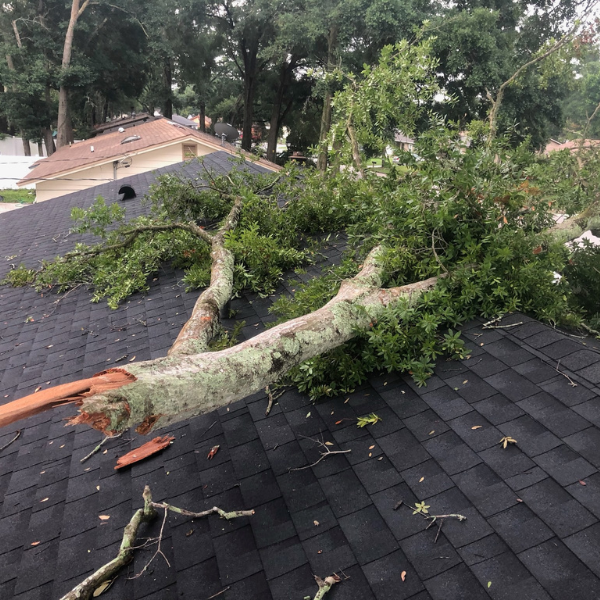
Hurricane season starts June 1. That’s four months away. Four months to fix the tree problems that’ll put branches through your roof when the next storm hits.
We’re based in Casselberry. We work all over Orange and Seminole Counties. We’ve cleaned up after every hurricane that’s hit Orlando since we started. Ian. Irma. Matthew. Charley before that. Same story every time. Trees that looked fine before the storm didn’t make it through. And most of those trees had warning signs nobody acted on.
What this covers:
- Three things you do now that prevent tree failure in hurricane winds
- Which Orlando-area trees fail first (and why)
- What “hurricane-proof trimming” actually means
- Storm damage we’ve seen that was 100% preventable
- Cost of prep vs. cost of cleanup
Step #1: Remove Dead Wood Before June (Don't Wait)
Dead branches don’t bend in wind. They snap. Then they’re airborne.
We’ve pulled dead oak branches out of roofs, through windows, sitting in pools. Every single one came from a tree the homeowner “was planning to deal with.” Then the storm hit first.
Walk your property now (January’s perfect timing). Look up. Dead branches stand out. No leaves. Brittle. Different color than live wood. You’ll see them.
More than three dead branches in the canopy? Call someone. That tree’s declining and it’s dropping wood during the next big wind event.
One branch? You can probably wait. Ten branches? You’re gambling.
We trimmed a laurel oak in Winter Park last February. Homeowner called saying the tree “looked thin.” We counted 20+ dead branches scattered through the canopy. Removed all of them. Three months later a severe thunderstorm rolled through (60 mph gusts). That oak lost zero branches. The neighbor’s oak (nobody had touched it) dropped a limb that crushed their fence.
Dead wood removal isn’t expensive. $200-$600 for most residential trees. Way cheaper than a new roof section.
Step #2: Thin the Canopy (Wind Needs Somewhere to Go)
Dense canopies catch wind like a sail. Then the whole tree rocks. Roots loosen. Tree goes over.
Proper storm prep means thinning the canopy so wind moves through instead of pushing against it. We’re not talking about topping the tree (never top trees, that weakens them). We’re talking about selective branch removal that opens up the structure.
Target: 20-30% canopy reduction for most trees. That’s enough to let wind pass through but not so much you stress the tree.
Dense trees that need thinning: Live oaks. Laurel oaks. Southern magnolias. Sweetgums. Any tree with a thick, bushy canopy.
We thinned a live oak in Maitland last spring. Canopy was so thick you couldn’t see through it. We removed interior branches, crossing branches, and stuff that was crowding the structure. Opened it up maybe 25%. Hurricane Debby came through in August (not a major storm but decent winds). That oak didn’t move. Neighbors lost branches all over the street.
Cost for canopy thinning: $300-$1,200 depending on tree size. One-time expense. Protects you for 2-3 years.
Step #3: Check for Weak Attachments (These Break First)
Trees don’t always fail at the base. They fail at weak branch attachments.
Co-dominant stems are the worst. That’s where two trunks grow from the same point with bark trapped between them (called included bark). Looks like a V. That V is your failure point. Wind loads one side. The attachment splits. Half the tree comes down.
We see this constantly in Orlando. Bradford pears are notorious (weak attachments everywhere). Laurel oaks. Silver maples. Eucalyptus. Even some live oaks if they’re structured poorly.
Walk around your tree. Look for V-shaped branch unions. Look for cracks at attachment points. Look for bark that’s trapped between two branches growing together.
Found a weak attachment? Two options. Cable it (we install flexible cables that support the branch during wind). Or remove it (if the branch is over your house, removal’s smarter).
We cabled a massive live oak in Longwood two years ago. Had a co-dominant stem that was probably 18 inches in diameter. Right over the house. Homeowner didn’t want to remove it (sentimental value, whatever). We cabled it. Hurricane Idalia hit in 2023. Cables held. Branch stayed put.
Cabling costs $300-$800 per branch. Removal costs more but it’s permanent.
Which Orlando Trees Fail First in Hurricanes
Not all trees handle wind the same. Some species are tougher. Some break apart like they’re made of balsa wood.
High-Risk Trees (These Go First)
- Bradford pears: Weak wood, weak attachments, shallow roots. These don’t survive major storms.
- Laurel oaks: Fast-growing, brittle wood, prone to rot. Life span’s only 50-70 years and they fail before that.
- Water oaks: Similar to laurel oaks. Shallow roots. Break in wind.
- Eucalyptus: Drop branches without warning (even without storms). Terrible choice for Florida.
- Pines (slash and longleaf): Shallow roots in sandy soil. Go over easy.
Better Storm Trees
- Live oaks: Deep roots, flexible wood, strong structure (if maintained right).
- Bald cypress: Native, handles wind well, deep roots.
- Sabal palms: Flexible trunks, designed for wind.
- Crape myrtles: Smaller, flexible, rarely fail.
You’ve got a Bradford pear or laurel oak near your house? Plan for removal. It’s not if it fails. It’s when.
What "Hurricane Trimming" Actually Means
Lots of companies advertise “hurricane trimming” or “storm prep pruning.” But not everyone does it right.
Real storm prep trimming includes:
- Remove all dead, dying, and diseased wood
- Thin the canopy to reduce wind resistance (not topping)
- Remove crossing branches and rubbing limbs
- Cut back branches overhanging structures
- Address weak attachments (cable or remove)
- Clean up interior growth that catches wind
What it doesn’t include:
- Topping the tree (cuts the top off flat). This creates weak regrowth that breaks in storms. Never let anyone top your trees.
- Lion-tailing (stripping all interior branches and leaving just tufts at the ends). This stresses the tree and makes branches whip in wind.
- Over-pruning (removing more than 30% of the canopy). Stresses the tree.
We see badly-pruned trees all over Orlando. Someone came through and hacked them. Tree looks terrible. And it’s weaker now than before they touched it.
Proper pruning costs more. It takes time. But it’s the difference between a tree that survives and a tree that drops on your house.
Storm Damage We've Seen That Was Preventable
Hurricane Ian hit in 2022. We were out for weeks doing cleanup in Seminole County.
Here’s what we found. Trees with obvious rot at the base? Those went over. Trees with dead canopies nobody removed? Dropped branches everywhere. Trees nobody had trimmed in 10+ years? Failed at weak attachments.
One house in Casselberry. Big laurel oak in the front yard. Homeowner knew it had issues (we’d given them a quote six months earlier to remove dead wood and thin the canopy). They didn’t do it. Ian came through. Oak dropped a 12-inch branch through the master bedroom window. Insurance covered repairs. But the house was uninhabitable for three weeks during repairs.
Cost to trim that tree beforehand? $480. Cost of repairs, deductible, hotel stay, and hassle? Thousands.
Another house in Oviedo. Bradford pear split right down the middle during Ian. Half fell on the garage. Totaled two cars. That tree had a visible crack at the base for over a year. We’d recommended removal. They waited. It cost them.
Most storm damage is preventable. Not all (hurricanes are powerful). But most.
Prep Now or Pay Later
Hurricane prep costs money upfront. But cleanup after damage costs way more.
Typical Prep Costs (Per Tree) Dead wood removal: $200-$600
Canopy thinning: $300-$1,200
Weak attachment cabling: $300-$800
Full tree removal (if needed): $600-$3,500
Typical Cleanup Costs (After Failure) Emergency tree removal: $1,000-$5,000
Roof repair: $2,000-$15,000
Fence repair: $500-$3,000
Window replacement: $300-$1,500 per window
Vehicle damage: $1,000-total loss
Insurance deductible: $1,000-$5,000
Temporary housing: $100-$200 per night
Spending $500 now to trim a tree beats spending $10,000 later to fix what it landed on.
And insurance doesn’t always cover tree damage. They’ll cover damage to structures. But if the tree was “obviously hazardous” before the storm (dead, rotting, leaning), they can deny your claim for negligence.
Better to fix it now.
Start in Winter (Here's Why)
Best time for storm prep trimming? January through March.
Reasons. Trees are dormant (less stress from pruning). Our schedule’s lighter (faster response, better pricing). You’ve got time before hurricane season (no rush jobs). And visibility’s better (deciduous trees have no leaves so we see the structure clearly).
Don’t wait till May to call. By May everyone’s calling. We’re booked. Prices go up (demand). And you’re cutting it close to June 1.
We book storm prep work starting in December. By April we’re usually full through June. Smart homeowners call early.
Insurance Might Cover Some of This
Some homeowners insurance policies offer discounts for storm mitigation work. That includes tree trimming and removal of hazardous trees.
Check with your insurance company. Ask if they have a windstorm mitigation discount. Some will inspect your property and recommend tree work. If you complete it, your premium drops.
We’ve worked with several insurance companies on this. They send an inspector. Inspector flags trees. We do the work. Homeowner submits receipts. Premium drops 5-15% depending on the carrier.
Not all companies offer this. But worth asking.
Call for a Free Assessment
All Southern Outdoor provides free storm prep assessments across Orange and Seminole Counties. We’ll walk your property, identify at-risk trees, explain what needs attention, and give you a written quote. No pressure. No upselling. Just straight information so you can make good decisions before hurricane season starts. Call (407) 630-8674 to schedule. We’ve been doing this for years. We know what fails and what doesn’t.